Wednesday, 11 May 2022

Pentire

I have been very successful so far on this National Trust Scone Odyssey. I have very rarely failed to find a scone. I had a few near misses earlier this year, what with bad weather forcing early cafe closures and good weather forcing other people to buy all the scones before I got there, but it has always worked out OK.

My luck ran out today though. I was planning to visit Pentire in Cornwall on Tuesday but noticed on the website that the tea kiosk was going to be closed. I probably tempted fate by enthusiastically praising my own cleverness for avoiding disaster, because I moved the visit to Wednesday...and it was still closed.

Pentire Cafe
You can't win 'em all

But the sky was blue and the sun was shining so I set off for a lovely walk towards Pentire Point. 

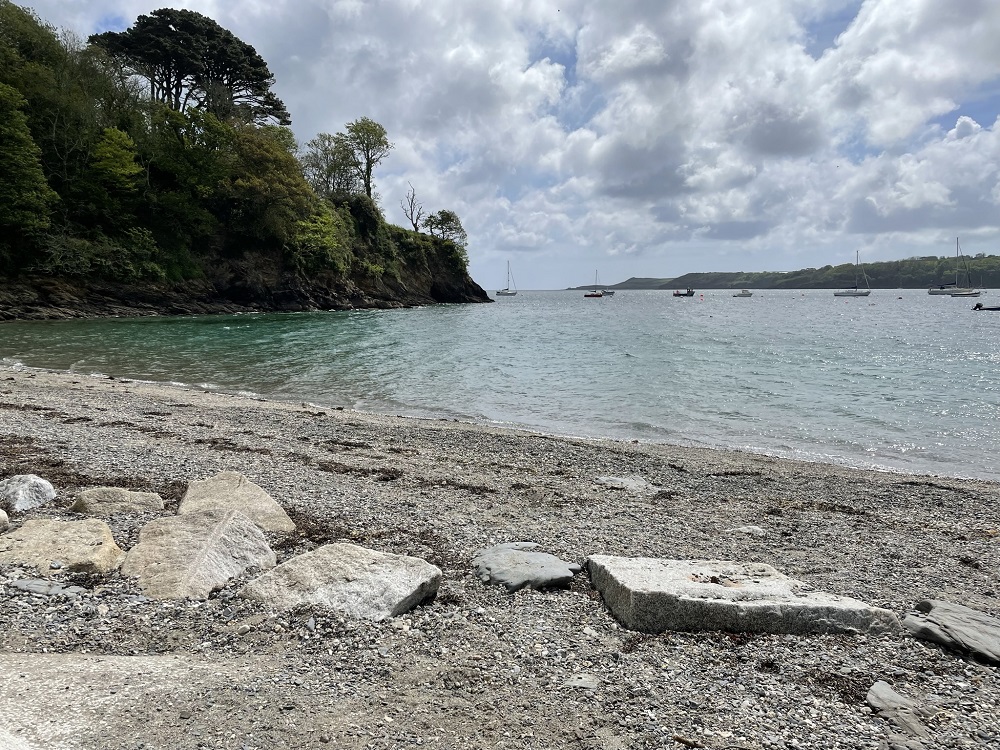
Pentire in Cornwall

It was only when I got home that I realised the war poem 'For the Fallen' had been composed by Laurence Binyon while he was sitting on the cliffs between Pentire Point and The Rumps. There's a plaque that I completely failed to see, which features the most famous verse: 

They shall grow not old, as we that are left grow old
Age shall not weary them, nor the years condemn
At the going down of the sun and in the morning
We will remember them.

The National Trust once again providing surprises where you least expect to find them. 

Be reassured that I did get a scone today - I had added Carnewas at Bedruthan to my itinerary as a bonus stop on my mini road trip and the scones were delicious, even if they weren't strictly National Trust. Plus I'd had a fantastic NT scone at Godolphin on Monday. So all is not lost as we head into the final straight of the scone quest!

Pentire: 5 out of 5
Scone: 0 out of 5, as there wasn't one
Inspiration for poets: 5 out of 5

Carnewas at Bedruthan

I had originally decided not to include Carnewas at Bedruthan in this project. Although the NT website mentions a tea room, I had heard that it wasn't actually NT-run. The Ancient Rules of the National Trust Scone Blog (written last month) dictate that any tenant-run cafeterias are not mandatory to the quest and so I'd ruled it out on the basis that I probably already had enough on my plate.

Bedruthan

However, Carnewas is near Padstow and I'd never been there, plus the 2022 National Trust Scone Tour of Cornwall (see also Godolphin and Penrose) took me very close by. It seemed rude not to call in, so I added it to my list and headed off. My enthusiasm for a bonus scone was tempered somewhat by the pouring rain but I figured I'd manage. 

The NT website had informed me that the steps down to Bedruthan beach are currently closed due to a rock fall. I won't lie - I was actually quite relieved when I saw them. It was windy and wet, plus it was also early, so there was no-one else around. I imagined myself being blown off the cliff and the Mystery of the Missing Scone Blogger making page 22 of the local paper, until I was found in the sea, wearing my flimsy coat and trainers, at which point all sympathy for me would have eroded.

Anyway, putting my mad imaginings aside, the views from the cliffs were spectacular. The sun came out and I wandered along the well-marked footpaths feeling very pleased that I had made the extra stop.

Carnewas at Bedruthan

The tea room was also worth the detour. They go big on breakfasts, so I felt a bit weird asking for a cream tea at 10.45am. They delivered though, and I got two excellent scones with loads of cream and jam (I also got two plates, so I assume you're only supposed to share the serving between two people). 

Bedruthan Scones

The scones were light and quite bready - they weren't Cornish splits but they were split-ish. They were perfection on a plate.

I then drove on to Padstow for a fish and chip lunch before heading to Pentire. The tea room at Pentire was closed, which I was sad about, but my arteries were probably overjoyed.

Carnewas at Bedruthan: 5 out of 5
Scone: 5 out of 5
Sunshine on a rainy day: 5 out of 5

Tuesday, 10 May 2022

Penrose

Someone asked me at the start of the year how I was planning to celebrate the completion of the National Trust Scone Quest. I was a bit confused: surely eating 200 scones is reward enough? But I never turn down an opportunity to treat myself and so I decided that my self-prize would be a trip to a National Trust holiday property.

It's possible that you didn't know about National Trust holiday accommodation. There's loads of it: the NT has about 470 holiday cottages, as well as bothies and camping grounds and even hotels, all around the UK. 

I love the thought of staying on a National Trust estate. In 2016, we did just that, when we went to Boscastle in Cornwall and stayed in an old pilchard cellar. They'd taken the pilchards out, thankfully. The building contained our holiday apartment as well as...big drum roll please...the Boscastle tea room. This was, and still is, extremely exciting to me. Some people dream of swimming with dolphins; I dream of living with National Trust scones. 

So I scouted around for a treat destination and up came a holiday apartment on the Penrose estate, again in Cornwall. The apartment was in the old stables. I checked and the Penrose tea room was also in the old stables. I figured it probably wouldn't have two old stables - and I was right! I could BE AT ONE WITH THE SCONES. Then I thought: why wait until I've finished the quest to reward myself? I could claim my reward early AND visit my final Cornwall properties!

Except it didn't quite work out. The tea room at Penrose isn't open at the moment. The website said something about it not being ready for Easter, but I had taken the optimistic view that maybe they just hadn't updated the website recently. But no. The doors were closed and the oven was off.

Penrose Stables
The Penrose Stables. No scones today. But a great holiday apartment.

I'm sure the closure had its benefits. The people that had stayed at Penrose before me had left a note in the visitors book saying "It's our third time here and it was so lovely and quiet this time without the tea room! But we missed the cake and sandwiches." Which probably sums it up. 

But! The motto of the National Trust Scone Blog is 'NEVER MIND', and I was lucky enough to be doing a mini road trip, which meant I had Godolphin and other spectacular successes to make up for a small set back.

After I had stared forlornly at the tea room for 5 minutes, willing someone to open the door and say "Oh hi! We decided that 4pm on a Tuesday afternoon was the perfect time to reopen - how fortunate that you happen to be passing! Come in!", I realised that I didn't know anything else about Penrose at all. I had got totally distracted by my Hotel Sconeifornia and I was now at a bit of a loss as to what to do next. There's a big house on the Penrose estate but it isn't open to the public. 

There were a few signposts to Loe Pool that pointed me along the path, so I set off. I soon found myself walking alongside a freshwater lake that is actually the largest natural body of water in Cornwall:

Loe Pool

What is highly unusual about Loe Pool is that when you reach the far end of it, it is separated from the Atlantic Ocean by a very narrow strip of sand and shingle beach called Loe Bar. Below you can see Loe Pool on the left, then the strip of beach, then the Atlantic Ocean on the right:

Loe Bar Beach

It was about 5pm when I finally got down onto Loe Bar, so there was hardly anyone else there. It just blew my mind that I could stand on the Bar and face one way towards a lake and lush green estate leading up a hill, and then turn 180 degrees on the exact same spot and be facing the flatness of the wild Atlantic Ocean:

The view from Loe Bar facing the ocean

The view from Loe Bar, on the exact same spot, but facing Loe Pool and the Penrose estate

It's a beautiful spot, but back in the day Loe Bar was extremely dangerous for ships and sailors. In 1807, a 44 gun frigate called HMS Anson sank with over 100 fatalities. 

The Rogers family, who had bought the estate in 1771, had the "rights of wreck" up until 1881. This meant that any cargo belonged to them if a ship was wrecked in the area - this could (and did) include expensive wine among other things.

Before the Rogers family acquired the estate, it had belonged to the Penrose family. When their male line failed, the Rogers bought the place and built the stables and extended the house. By 1876 it was the 15th largest estate in Cornwall. 

In 1974, the estate, along with Loe Pool and 4 miles of foreshore, were given to the NT by John Peverell Rogers. He retained the house and it passed to his son Charles in 2012. When Charles died in 2018, he appeared to have left no heir but his son Jordan Adlard Rogers (who had always known that Charles was probably his father) came forward and, following a DNA test, has now inherited the place.

Penrose is absolutely worth a visit for the highly unusual Loe Bar experience - although maybe wait until the tea room is open again and you can post one to me??

Penrose: 5 out of 5
Scone: 0 out of 5 - the tea room is closed 
Loe Bar Beach: 5 out of 5 


Monday, 9 May 2022

Glendurgan Garden

There are some things in life that definitely look better in photos than they do in reality. Likewise, there are some things that look better in real life - most food, for example, doesn't photograph well unless you have professional lights and styling. Scones are obviously the exception - they always look great.

Anyway. Today I discovered that the extremely photogenic maze at Glendurgan Garden in Cornwall is ten times as impressive and astonishing in real life as it is in the photos. You have to go and see it for yourself - put it on your lists. 

The Glendurgan Maze

Let's start with the maze. I'm sure everything else at Glendurgan gets fed up of playing second fiddle to it, but it's the star attraction for good reason:

Glendurgan Garden

The maze was built in 1833 by Alfred Fox to entertain his friends. He modelled it on the maze at Sydney Gardens in Bath, although that was built on flat ground.

The guidebook says "it looks like a tea plantation in Assam" and that is absolutely true. It also feels like a tea plantation in Assam - if you're over 4' tall, you'll be able to see over the hedges as you walk around. I was thinking 'I can see exactly where I'm going - how hard can this be??' except it was hard. I would suddenly come to an unexpected dead-end, and it didn't matter whether I could see over the hedge or not - I still had to go back. It was a really interesting experience.

I was also completely shocked by the final paragraph about the maze in the guide book: "In 1991 the Maze was in a really poor condition and a decision was taken to restore it. The hedges were cut to ground level, the path surfaces were reinstated and the summer house added. Although a difficult decision at the time it has resulted in a maze in very good health." 

Can you EVEN IMAGINE being responsible for the decision to raze the Glendurgan maze to the ground? And then being the one to actually go in there with the chainsaw (OK - maybe they didn't use a chain saw)? There's a photograph of it in 1991 and it looks like a muddy field containing some very small rose bushes. National Trust gardeners have stronger nerves than me, that's for sure.

But there's more to Glendurgan than the maze. I'll start with some history:

  • The garden was started by Alfred Fox in the 1830s.
  • Alfred came from a wealthy Quaker family of ship agents - they were also keen gardeners.
  • He built a thatched cottage on the estate in 1826 - apparently one day he was having lunch when he was informed that the cottage had burnt down. Rather than being annoyed, he took the opportunity to build a bigger house. 
  • His grandson, Cuthbert, decided to give the garden to the National Trust in 1962.

The other attractions include:

  • The Holy Bank - there's a Victorian section of the garden containing appropriate plants, including a Judas tree, a Crown of Thorns and a Prickly Moses.
  • Areas dedicated to New Zealand and Bhutan, as well as the Jungle, which contains giant rhubarb and banana leaves.

Glendurgan

Durgan 

At the bottom of Glendurgan Garden is a small former fishing village called Durgan. It's tiny - it mainly consists of National Trust holiday properties. But it's a beautiful spot with a little beach for a quiet change of scene.

Durgan seashore

The Glendurgan Scone

I recently heard a rumour that the National Trust employs stunt scones. This was shocking news indeed. I assume that National Trust stunt scones are varnished or made out of papier-mâché or something so they can make drawing rooms look lived in, rather than throwing themselves out of windows or getting blown up.

When I saw the Glendurgan scone today, my first thought was "this scone should DEFINITELY apply to be a National Trust stunt scone". It was HUGE. It was also the perfect colour with a good rise on it. Sadly for the scone, it never made it to the auditions because I was hungry and needed to eat it. It also turned out to look slightly better than it tasted. It was nice but a bit dry.   


The Glendurgan Maze really does need to be experienced though, so put it on your lists next time you're in Cornwall!

Glendurgan Garden: 5 out of 5
Scone: 4 out of 5
Maze that looks easy but isn't: 5 out of 5

Godolphin

To borrow a phrase from the great Brian Clough, Godolphin in Cornwall isn't the best National Trust property in the world but it's in the top one. That's obviously not quite true, as there's no such thing as 'the top' National Trust property, just as you can't really have a top song or a top book or a top Brentford player for the 2021/22 season (they're all Player of the Year as far as I'm concerned). But Godolphin is undoubtedly a fantastic place.

Godolphin

Where do I even start? I'm going to break with National Trust Scone Blog tradition and start with the tea room, as it gives you a good sense of the place. I actually walked right past it initially because a) it doesn't look like a cafeteria and b) there wasn't a sign for it. I later found out that there are very few signs at Godolphin because they're trying to keep the place as simple and uncluttered as possible. The house also isn't open very often, so check before you go.

In dire need of a cup of tea and my all-important scone, I consulted the map and saw "The Piggery", which is hands-down the best name for a National Trust tea-room. What makes it even better is that the building genuinely used to be a pig sty. In fact, you don't need a ton of imagination to actually picture that, as you'll see from this photo. You can probably understand why I walked straight past it. It's absolutely lovely inside, I promise:

Piggery
The tea room. If these walls could talk...they'd say 'oink'.

And that experience set the tone for the whole place: a very quirky, impressive and fascinating property with lots of history. So let me try and tell you a bit more about Godolphin.

The Godolphin estate can be traced to the Bronze Age!

There is a plentiful supply of tin and copper within the Godolphin estates. Tools have been found linking the area to the Bronze Age of 2000-850 BC.

The present house is the third one built by the Godolphins!

The first reference to a house dates to 1166, but it was Alexander de Godolghan who built a fortified house and formal gardens around 1310. What was left of that building was demolished in 1475 by John Godolphin, who used the materials of the old house to construct his new abode. 

The present house - looks smaller from the outside! 

I have to confess that I couldn't really work out where the missing rooms should have gone and how the whole property would have been laid out. This is despite a human guide explaining it and me reading the guide book about 10 times. What I do know is that from the outside the remaining house looks quite small, but inside it feels big. I know. It's simply astonishing that the Architect's Journal hasn't offered me a job.


The Godolphins died out!

Francis, the 2nd Earl and owner of the famous horse mentioned below, married the Duke of Marlborough's daughter and had three children. His only son died young, however, and a cousin died childless, so the male line came to an end when Francis died in 1785. One of his daughters married the Duke of Leeds and the property passed to him. He was happy to keep the income from the tin mines but was not interested in the house.

The house fell into disrepair!

With no-one using the house, the usual thing happened: the pigs moved in. Tenant farmers started to use the decaying buildings to house their livestock and potatoes. 

Sydney Schofield saves the day!  

Sydney Schofield was the son of Elmer Schofield, an American painter. Sydney also painted but had decided to become a farmer. He bought Godolphin in 1937 and he and his wife devoted themselves to restoring the place. The National Trust acquired part of the estate in 1999 and then the rest in 2007.  

It's now a holiday home!

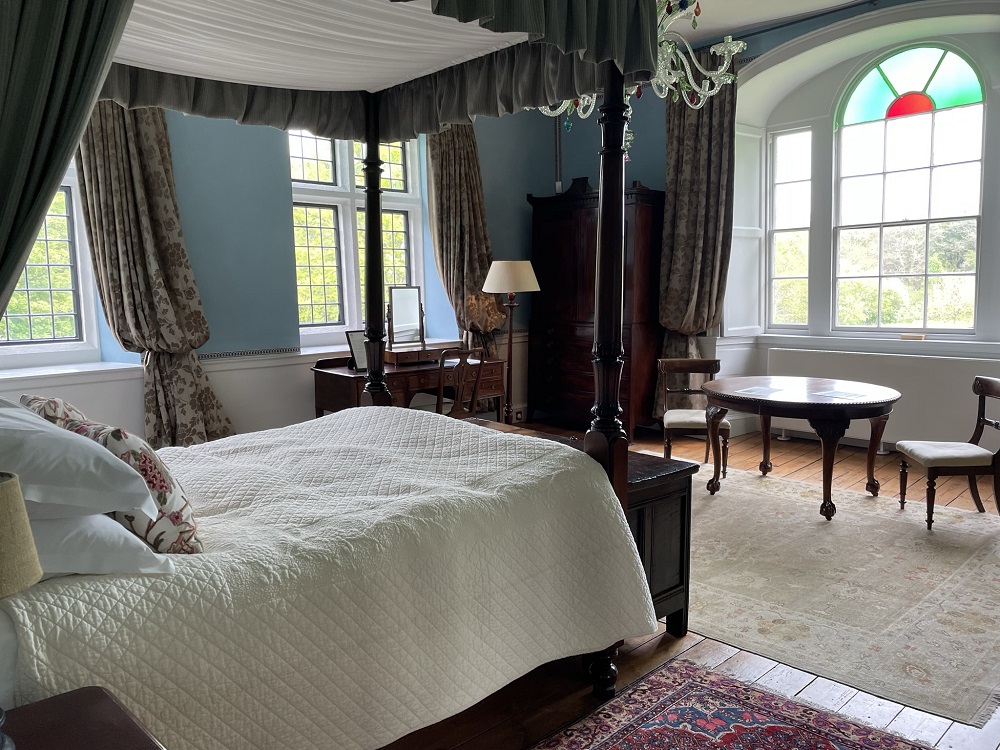
I knew that the National Trust owns hundreds of holiday homes and apartments around the UK, but this is the first time I've visited a property that you can actually rent. It really is impressive - it must be great to spend a few days here imagining that you own the place.

Godolphin Living Room

Godolphin Bedroom

Godolphin - The Home of 'Godolphin'

I was vaguely familiar with the word 'Godolphin' before today, but had just lazily assumed it was the name of one of King Arthur's lesser-known knights or something like that. In fact, one of the uses of the word that I recognised - the Godolphin & Latymer school in Hammersmith - has connections to the family. One of the Godolphins died and his money was used to found a school. The school has changed location and shape over the years but the name has persisted.

The other use of 'Godolphin' that I had come across is in horse racing. The hugely successful Godolphin stable is owned by the Maktoum family but it turns out that this, too, is connected to the Cornwall estate. The stable is named after a famous horse, the Godolphin Arabian, who was one of three stallions from whom all modern thoroughbreds are descended. He was owned for a time by Sir Francis Godolphin, hence the name.

The Godolphin Arabian. A lovely horse. Named after his owner, the 2nd Earl,
making the Godolphin name synonymous with thoroughbred success.
 

Polly, The Milkable Cow

Until today, if you'd asked me for the most unexpected thing I've ever seen at the National Trust, I'd have said either the Dalek in the stable at Tredegar or the honesty box for sherry at Goddards. 

But today I discovered Polly, the milkable cow. I can confirm that she isn't real, life-like as she may look. But it's a great idea and a very clever use of the area. 

Polly the milkable cow

Polly the milkable cow

The Godolphin Scone

Another first today was that the assistant in the tea room took my order and then offered to bring it over to me when it was ready - I know it doesn't sound like much but tiny things often make a difference. The large scone looked unusually golden when it arrived, and it was warm. I had the usual 'is it a weeny bit underbaked?' conversation with my internal Mary Berry (this always happens when a scone is warm) but the scone world's version of VAR (or Video Assistant Referee to anyone not interested in football) ruled in favour of perfection. 5 stars to the Godolphin scone!  


The best thing about Godolphin is that it just feels like a wonderful place. It has fascinating history, beautiful rooms, and lovely gardens and outbuildings. It has a Piggery. But more than anything, it's a lovely, calm but upbeat place and I highly recommend it. 

Godolphin: 5 out of 5
Scone: 5 out of 5
Milking lessons: 5 out of 5

Friday, 29 April 2022

Ascott

I've seen a lot of changes at National Trust properties during the nine years of this project. One thing that hasn't changed is the criticism that the NT gets for the 'Disneyfication' or 'dumbing down' of history and heritage. It was there when I started this blog and it's still there now, mainly in the Daily Telegraph, but it's there, depressing the living daylights out of most NT members.

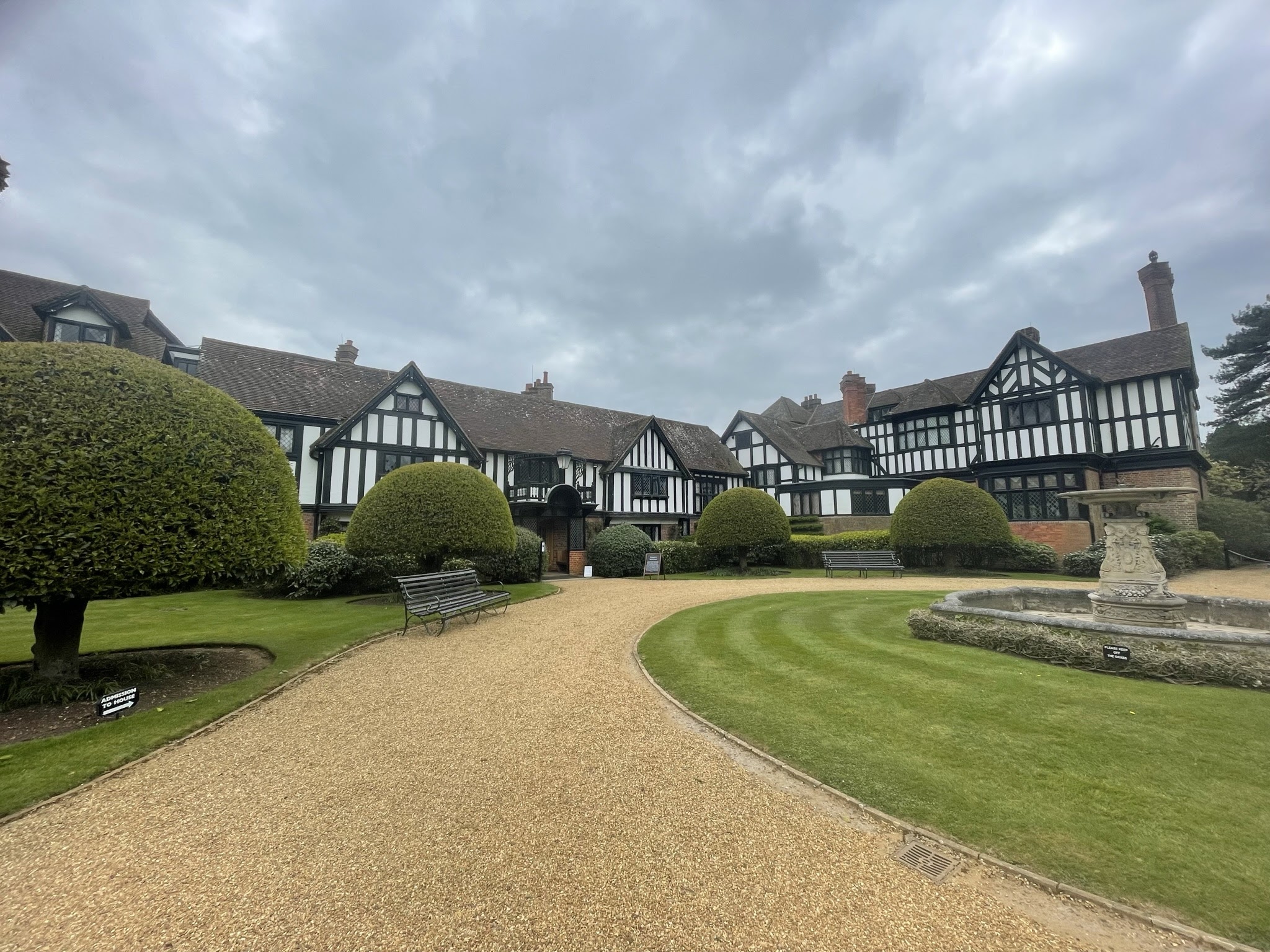
Ascott, near Leighton Buzzard, is to my mind what the Daily Telegraph wants the National Trust to be. It's a stunning estate - it's maintained beautifully, with not a leaf out of place. But there wasn't much to bring the place to life, or to explain its history, or to provide details of the people who have lived there over time. 

Ascott House

The reason for this is that it's still, in principle, a family home. Although Ascott is owned by the National Trust, the de Rothschild family still have use of it as a residence. You can look around the ground floor and peruse the collection of Ming porcelain and artworks. There were a couple of signs explaining the pictures and quite a few volunteer guides on hand, who were very pleasant and helpful. And for a lot of visitors, that's probably enough. For me, however, I love knowing about the people who built and lived in these places, and Ascott doesn't really offer that.  

So I did a bit of reading and discovered a few facts I can share:  
  • In 1873, Lionel de Rothschild (grandson of Mayer Amschel Rothschild, the man who started the famous European banking dynasty) bought a farm at Ascott for his son, Leopold. The architects took the original farmhouse and turned it into a hunting lodge and then a fashionable country house that Leopold could use for entertaining guests. He also had a successful stud nearby. 
  • Leopold's sister Evelina was the wife of Ferdinand de Rothschild, the creator of Waddesdon Manor
  • In 1947 the house and some of its contents were given to the National Trust. 
  • Sir Evelyn de Rothschild and his family still use the house on occasions and it is only open to the public at certain times, so be sure to book before you visit. 
Ascott Estate

The Ascott Scone

I wasn't entirely sure if the tea-room at Ascott was National Trust owned/run - according to the rules of the National Trust Scone Odyssey, a scone is only mandatory if it's officially NT. But I'm taking no chances at at this late stage of the project, so I went in anyway. And to be honest, I'm still not 100% sure - in some ways it was a very NT experience and it other ways it felt a bit different. 

The scone itself was fine. I did at one point wonder if it was a tad under-baked but concluded that it was just very cakey, with a lot of sponginess about it. It had a crisp exterior though, which was very good.

Ascott Scone

So that leaves just 19 properties left for me to visit. Today's trip made me realise that I probably shouldn't leave my final mission to chance - I have to make sure that it's a visit to remember for all the right reasons. I'm therefore adding one special place back on to my list and intend to close proceedings there in August. But for now - stay tuned as we embark on the final 19 scone expeditions!

Scone Map

Ascott: 3 out of 5
Scone: 4 out of 5

Friday, 15 April 2022

Brean Down

The most important piece of advice I can give anyone is simply this: never trust a bus timetable. There have been a few occasions during this National Trust Scone Odyssey when I have required the services of a bus and I can honestly say, hand on heart and without exception, that I have always been completely stunned when the bus actually turned up. And to be fair, they've turned up more often than they haven't. But I'm still always really surprised when they do.

And I will add to this, because there is one particular day of the year when you must NEVER trust a bus timetable and that is Good Friday. At least on Christmas Day you can be certain that there won't be a bus. But Good Friday? Just don't go there.

Anyway, today I went there, despite knowing the above. I checked the timetable for the bus service that goes to Brean Down from Weston-super-Mare and it clearly showed a service for public holidays. But there was no bus. Luckily, I knew the Brean Down Way provided an 8-mile walk from Brean to Weston. I'd been deliberating whether to attempt it, so the bus shortage made my mind up, while a taxi took me out there. 

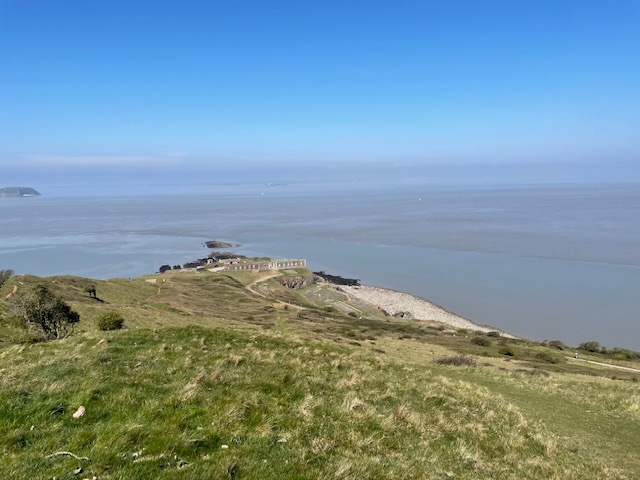
Brean Down Fort View

The slight snag with doing an 8 mile walk after a visit to Brean Down is that Brean Down itself requires a bit of effort. A nice amble on the beach it is not. As I dragged myself up the steps to reach the top of the promontory, I found myself thinking "is this fun? I'm not sure this is fun", before I reached the summit and was treated to the amazing views that make a climb worthwhile. 

Let me tell you a little bit about Brean Down:

  • Brean Down is a promontory stretching 1.2 miles into the Bristol Channel
  • People have used Brean Down for thousands of years - a possible long barrow mound suggests Neolithic occupation, while remains of an Iron Age hill fort and Roman temple have also been found
  • In the 19th century, plans were drawn up to turn Brean Down into a harbour that could act as a transatlantic port. The project was beset with problems and it didn't materialise.
  • Brean Fort was built at the far end of Brean Down between 1865-1872 as part of a chain of forts designed to protect against the French.
  • The main building we see today (below) was the barracks for 50 men
  • The fort was refortified in 1941 during World War II 


For some reason it reminded me of the Alamo. This isn't so strange - they're both forts after all. But I've never actually been to the Alamo, so I'm not sure why I made that connection. Maybe the sun was getting to me.

The walk along the promontory to the fort had been quite tricky - the steep steps, then an uphill incline followed by a steep downhill section that I wouldn't want to do on wet ground. I thought sadly of the people with mobility issues who wouldn't ever be able to see Brean Down. On my return walk, I discovered that I'd taken the high road route and an alternative was available -  a mostly flatter gravel path that was being enthusiastically used by highly determined folk powering themselves up the hill in all terrain mobility trampers. Never underestimate the National Trust or its members. 

The Brean Down Scone

It must be said that even the Brean Down cafe makes you work a little harder than your average NT property. I helped myself to a fruit scone and had paid for it when the assistant explained that I would find the jam and cream in the fridge and then I needed to pick up my drink from the counter in the other room. I ran around, collecting the constituent parts of my cream tea, feeling like I was on the Crystal Maze. It wasn't unpleasant - just different.

Brean Down Scone

It was worth it though, because the Brean Down scone was a lovely one - very big and even. It was fresh, full of fruit and very tasty, so it gets full marks from me.

And, despite the exertion, I can also recommend the walk back to Weston-super-Mare. The Brean Down Way is mostly flat and very well designed and maintained - once you get through Brean you don't encounter any cars for a few miles until you get to Weston itself. I did have the unexpected problem of sun (unexpected because it was April). I decided to buy myself a hat to prevent my face looking like a beetroot but the hat turned out to be a kid's baseball cap, so I had to walk along with a little hat perched on my head, looking like one of the Mr Men. 

As my weary legs carried me up the seafront in Weston, I was able to gape in awe at Brean Down in the distance. It looked like a sleeping crocodile about to glide down the Bristol Channel and I was inordinately proud of having walked all the way from the tip of its nose. 

Brean Down from Weston


Brean Down: 5 out of 5
Scone: 5 out of 5
Walking the Brean Down Way path to Weston-super-Mare: 5 out of 5