Showing posts with label North Yorkshire. Show all posts

Saturday, 5 March 2022

Ormesby Hall

I don't suppose there are many people in the world who would attempt a day trip to Middlesbrough from London, apart from football fans and scone bloggers. But that's what I did today: a 480 mile round-trip for a National Trust scone. 

Back in January, I'd looked at the list of places I needed to visit in order to finish the National Trust Scone Quest and two thoughts came to mind:

1. I only have 24 properties to go - I will SURELY complete the task this year
2. Those 24 properties include one in North Yorkshire, one in Snowdonia, one in Essex and three in Cornwall. How did I let this happen? 

What made it even more troublesome was that Ormesby Hall near Middlesbrough seemed like an understated kind of place. It didn't claim to be involved in any major historical event, like Moseley Old Hall, or have a scandalous past like Seaton Delaval

But if I've learned one thing over the past 9 years of this project, it's never underestimate a National Trust property.
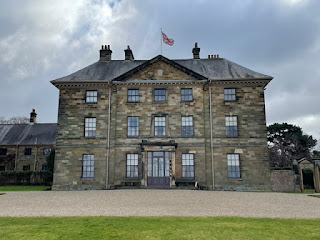
Ormesby Hall

To summarise: I absolutely loved Ormesby Hall. There are many reasons for this: the homeliness of the place, Ruth Pennyman and her headscarf, the tea-room inside the house, the surprise model railway, all of which you can read about below.

But before I get onto the history, I'm going to give a mention to the volunteer guides. There are some properties where you just strike lucky with entertaining, informed, passionate guides and the ones at Ormesby were brilliant. There was no guide book, so I had to try and learn as much as I could from them and they didn't let me down.

Ormesby - owned by the Pennyman family

The Pennyman family lived at Ormesby for over 400 years, although the present house was built in the 1740s. They sound like an interesting bunch, always on the wrong side of things: Robert Pennyman had been executed in 1569 for his part in the Pilgrimage of Grace against Henry VIII. They were Royalists in the 17th century, with William Pennyman (the 1st Baronet) fighting for the King at the Battle of Edgehill in 1628. 

The 'Wicked' Pennyman bankrupts the place

James, the 'Wicked' 6th baronet, was a gambler who landed the family in bankruptcy. The guide told me that he had inherited £25m in today's money but it was soon gone. The contents of the house were sold off and the place was shut for almost 20 years. His son William managed to get it back on its feet - when he died without children the estate passed to his aunt and her family, while the baronetcy became extinct.

Jim and Ruth - the final Pennyman residents

The last Pennyman to inherit Ormesby was James Beaumont Pennyman. His first wife died in childbirth and in 1926 he married a woman called Ruth Knight. I knew I liked Ruth from the minute I saw her portrait:
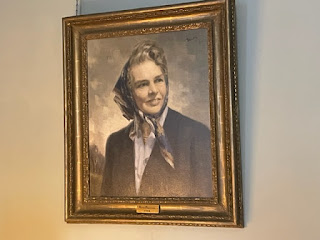
Ruth Pennyman

How many women would choose to sit for a portrait in a head scarf and blazer? She was obviously brilliant. I knew she was the kind of woman who got things done and I wasn't wrong - there were notices everywhere explaining how the couple had very different interests and political viewpoints but together they had set up schemes for unemployed miners. She was also very fond of the arts - visitors to the house included everyone from Sybil Thorndike to Ewan MacColl.

The Ormesby Model Railway

Before I move on to the all-important scone, I have to tell you that Ormesby Hall had a final flourish up its sleeve. It doesn't happen very often but occasionally you wander into the last room of a house thinking 'well, that was all very nice', expecting nothing more than a basket for your visitor surveys and an exit door with a handle that needs twisting a bit.

At Ormesby, I wandered into a final room to find an enormous model railway. In the middle of the railway was the nicest man in the world. He told me that Ormesby had decided to use the space to offer something to younger visitors and that a man had donated a fantastic model railway that had taken him 35 years to create. "To be honest, this ended up being something the adults love," he added. "So we put Thomas the Tank Engine next door." He pointed out the bits of the railway that were particularly relevant to the NT - Corfe Castle is in it, for example.

At that point, some other visitors wandered into the room so I thanked him and turned to leave. "Are you not going to see Thomas?" he said, sounding disappointed. I will admit that my heart sank a bit. I didn't want to be rude but I imagined that the room would contain a toddlers' table with some colouring pencils and books. But he had been so very lovely - I decided I would go and admire the crayons for him.

Reader, I was wrong. I have never been more surprised at the contents of a National Trust room. There in front of me was another model railway containing four trains, of Thomas and his friends. You could choose which button you pressed to set each in motion. My mind was blown, so a real fan of Thomas the Tank would probably have exploded with excitement. 


It was so good, I just spent 30 minutes working out how to upload a video onto the National Trust Scone Blog so I could share it with you. 

The Ormesby Hall Scone

But let's move on to the scone. I have to tell you that I've never met a National Trust tea room I didn't like. Team rooms fitted into stables or other out-buildings? Love the quirkiness. Large new-build cafeterias? Love the space and modern conveniences. Tea rooms located inside the house, thus allowing you to pretend you live there? Saddle up my second-best horse, Jeeves, I want to inspect the ha-ha after tea. 

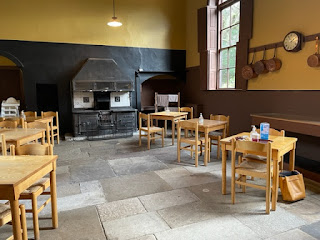
Ormesby falls into the latter category. It has been fitted into the kitchen area of the house and the service area is relatively small. Having been to two large modern tea spaces this year, I started to worry. I worried even more when they charged me £6.20 for a cream tea - ie the same as East Riddlesden the week before, where they seemed to have better facilities. What if this turned out to be a 'good effort with limited resources' type of scone?  

The worrying was for nothing. The scone was absolutely first-rate - very fresh, slightly warm and delicious. I ate every last crumb of it.
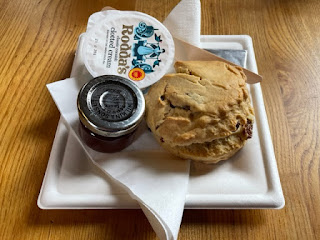
Ormesby Hall scone

I don't award points for tea room decor but I'd like to compliment Ormesby on providing a tea room that matched my bag:

Ormesby Hall tea room

The Scone Blogger has a Walk of Fame called "Houses I Would Live In Tomorrow If The National Trust Would Let Me, And Also Paid The Heating Bills". Ormesby Hall goes straight onto that list, along with Croft CastlePeckover, Goddards, Sunnycroft, Batemans, Arlington and Hughenden.

I will end by saying that every time I tweet about scones at the moment I feel a bit uneasy. Like everyone, I spend a lot of time reading and worrying about Ukraine. I know that scones are trivial compared with being bombed, killed, forced from your home. But all I can do (apart from donating to the Disasters Emergency Committee, which supports 15 UK charities in getting aid to the Ukrainian people) is to keep going. During those 14 hours on the road yesterday, all I could think about was how I had the freedom to travel from one end of a much loved country to the other and how one day the Ukrainian people will once again be able to do the same. Let's make sure that day comes soon.

Ormesby Hall: 5 out of 5
Scone: 5 out of 5
Thomas the Tank: 5 out of 5

Thursday, 14 November 2019

Podcast: The Christmas Pudding Scone at Treasurers House

It's time to get your earphones ready everyone, and brace yourself for me outing my pronunciation of the word 'scone' (please don't abandon me if it's different to yours - we're in this together).

I'm pleased to share a 15 minute podcast with you that I recorded at Treasurers House in York, home to the most memorable scone that I've had in the whole six years of the blog: the Christmas Pudding Scone with Brandy Butter.

You can tune in to the podcast here and and hear about:

  • The ghosts of Treasurers House - which one would you prefer to meet?
  • The history of the Christmas Pudding Scone with Brandy Butter 
  • The secret to how National Trust scones in York are all 5-star
  • How Monsieur Viande, the French chef of former owner Frank Green, is inspiring dishes in the cafe (warning: you will be hungry after this)

Monsieur Viande, the chef of one-time Treasurers owner Frank Green

Remember: you have until December 21st to try the Christmas Pudding Scone for yourself. Read the Christmas Pudding Scone Tour of York Intinerary that I lovingly prepared for you.

A huge thank you to Karla Simpson and Devon Allen for taking part in the podcast. Karla runs the food and beverage operation for Treasurers House, Goddards, and Beningbrough Hall so we have her and her team to thank for York's clean sweep when it comes to NT scones - every property has delivered a 5-star specimen.

Karla and Devon - stars of this podcast episode
Devon is the Visitor Experience Manager who is responsible for the stunning Christmas decorations that adorn Treasurers House until 21 December:


The full podcast series is on ice for now but stay tuned - we'll soon be entering the final year of the National Trust Scone Blog and I'm aiming for a series finale that surpasses Game of Thrones, The Sopranos, even Brookside.

Full link to podcast: 
https://soundcloud.com/user-876837325/the-christmas-pudding-scone-behind-the-scenes/s-hestD

Saturday, 8 September 2018

Nunnington Hall

I do like a bit of skulduggery and intrigue at my National Trust properties. If you read the Wikipedia entry for Nunnington Hall you'll find a mysterious little factoid; "Another feature of the garden are the resident peacocks. On June 10th 2007, Bluey, the head of the peacock family, died in suspicious circumstances." 

My imagination ran riot with this piece of information. Was he done in by another peacock? Poisoned by a crazed fan of a rival tourist attraction? Or did he end his own life, consumed with low self esteem because he hadn't been given a very imaginative name?


Nunnington Hall

But it wasn't suicidal peacocks I was looking for today. This trip to Yorkshire was an emergency; my last five missions (to BrockhamptonFyne CourtColeridge CottageThe Firs, and Dyffryn Gardens) were all very lovely, but none of the scones was top class. I was getting worried. I needed a five star scone.

In fact, Nunnington Hall itself turned out to be a nice little place and definitely one of those NT houses that you could live in. Here's some history:
  • In Tudor times, the Nunnington estate was owned by the Parr family - Catherine Parr found great fortune by marrying and outliving Henry VIII, while her brother William was sentenced to death for his part in putting Lady Jane Grey on the throne for nine days (he survived, although Nunnington was taken away from him)
  • The Norcliffe family built the oldest parts of the house we see today in the early 17th century
The Stone Hall at Nunnington
The Stone Hall, built in the 17th century.
Maybe not one for wildlife lovers.
  • Sir Thomas Norcliffe, a devout Puritan, gave the hall up to house Parliamentary troops during the Civil War, after which it fell into disrepair
  • Ranald Graham moved in next - he and then his great nephew Richard remodelled the house
  • Richard also ended up being sentenced to death, this time for being a staunch supporter of James II - he too survived, by naming all of his co-conspirators
  • Nunnington became a derelict farmhouse until bought by the Rutsons
  • Margaret Fife (who was born a Rutson) inherited in 1920 - she and her husband employed Walter Brierley (who also designed nearby Goddards) to turn Nunnington Hall into a family home, and that's what we see today
The Nunnington scone
But let's move on to the scone. It started well. The tea room is in the house and it's table service, which is quite rare - Goddards, Lyme, and Rufford Hall are the only others I can think of that come and take your order. There's also a really lovely tea garden but it was tipping it down with rain so I stayed indoors.

The scone arrived speedily and looked stunning.

Nunnington Hall Scones

Reader, it was stunning. It was light as a feather and fresh as a daisy. I cannot tell you how relieved I was to finally be back on the five star track.

I was so excited by the scone that I forgot all about Bluey the peacock and his untimely demise. Luckily, I was reminded by one of his peacock crew, presumably called Greeny or something, who was pecking about on his own looking for clues.


Nunnington Peacock

Nunnington Hall: 4 out of 5
Scone: 5 out of 5
Peacocks: My success in solving the mystery of Bluey's murder: 0 out of 5

Saturday, 28 November 2015

Fountains Abbey

I try not to be overly impressed by National Trust properties that have appeared on TV. However, Fountains Abbey near Ripon was in the video for Maid of Orleans, the atmospheric 1981 electro-hit by Orchestral Manoeuvres in the Dark, which IS worth writing home about (although I'm not actually going to write home about it, as my parents wouldn't have the faintest idea what I was talking about). 


This is not me bringing a horse to Fountains Abbey
to qualify for more scones - it's the OMD video.
In the video, Joan of Arc rides her behatted horse around the snow-covered ruins, until she is sadly murdered. I knew I was unlikely to see any snow - in fact, the sky was beautifully blue when we set off, so I was congratulating myself on some excellent scone scheduling.

I checked my weather app later and it told me to expect cloud in York. Never mind, I thought, that means atmospheric pictures of the ruins. But the rain was tipping down when we reached Fountains Abbey - the only pictures are of me and the Scone Sidekick staggering around like drowned rats. 

Of course, the upside of visiting during a torrential downpour is that we were pretty much the only ones there. I imagine this is a rare treat - Fountains Abbey is the National Trust's 5th most popular property, with a staggering 373,364 visitors per year. 

Things I Managed to Do Today:

1. Visit Fountains Abbey
Fountains Abbey is AMAZING. It's huge and it leaves you astounded - firstly that anyone managed to build such a thing over 800 years ago, and secondly that so much of it is still there. There are plenty of other abbeys that were closed during the Dissolution and ended up being rebuilt as homes for bigwigs - Lacock Abbey for one. Fountains Abbey is very different - you don't need much imagination to picture what life was like for the monks who lived there.

Fountains Abbey

Some brief history:
  • Fountains Abbey was founded in 1132
  • It was established by 13 monks, who left St Mary's Benedictine Abbey in York looking to return to the true teachings of St Benedict
  • They secured the help of the Abbot of Clairvaux and the Cistercian abbey was created
  • The abbey was maintained by monks (who did most of the praying) and laybrothers (who did most of the day-to-day running of the place)
  • Throughout the 1200s, Fountains Abbey was very wealthy and very powerful, mainly thanks to the wool trade
  • Trouble was brewing though - harvests failed, the sheep got a disease, and the Black Death wiped out a third of the population between 1349-50
  • The abbey revived itself in the later 1400s 
  • The imposing tower was built around 1500 by Abbot Huby
  • But in 1539 it all ended, when Henry VIII dissolved the monasteries and the deed of surrender was signed at Fountains Abbey
  • It was sold to a Robert Gresham, who was obliged to make sure it wasn't fit for religious use - he pulled the roofs down, basically
  • It was then owned by the Messenger family, followed by the Aislabies
  • The National Trust bought the estate in 1983
2. Eat Fountains Abbey scones 
Poor old Fountains Abbey was under extreme pressure today. Every other NT property in Yorkshire that I've visited has scored top marks for its scones; Goddards and Beningbrough Hall both got five out of five in July, while Treasurer's House has a special place in the Scone Blogger's heart for its fabulous Christmas pudding scone. 

The fruit scone at Fountains Abbey looked extremely solid. It was almost too solid - I was a bit concerned about it, to be honest. But it turned out to be delicious - it was crisp on the outside and good and fluffy on the inside. I came very close to knocking off half a point for the hard and flaky Rodda's, but the scone held its own so I didn't. This means that Yorkshire holds on to its unblemished record. Nunnington Hall and co - it's all resting on you in 2016.

Fountains Abbey scone

I was also OVERJOYED to see that Fountains Abbey was selling Christmas scones. It was lovely - it tasted of festive spices and fruit and I enjoyed it very much. 


But now we must be honest and consider the Things I Didn't Manage to Do Today:

1. Visit Fountains Hall 
Fountains Hall was built between 1597-1604 by Stephen Proctor, who had bought the land near the abbey. The Hall was eventually acquired by the Vyner family in 1923, who often entertained the Duke and Duchess of York (who later became George VI and the Queen Mum). You'd think that I would have welcomed any opportunity to get indoors today, but I was scared that I'd get in the warm and never want to leave. At least I have a reason to go back.

2. Visit Studley Royal Water Garden
The other reason I'll have to go back is to see Studley Royal Water Garden. I just couldn't face trudging around looking at water features today, when my shoes were rapidly turning into water features of their own. This was a shame because the garden was made a World Heritage Site in 1986 and it sounds amazing - it was originally created by John Aislabie who started planning around 1718 when he owned the Hall. It has canals and all sorts in it, so I'll definitely return one day.

3. Visit Brimham Rocks
I'm also going to 'fess up to you and admit that I had planned to visit Brimham Rocks today. I knew there wouldn't be any scones there, because they don't have a tea-room, but they do have very weird rock formations that look a bit like E.T. and have names like 'The Dancing Bear'. How can anyone resist that? (Plus - and I'm spoiling you with the pop-picking facts today - Brimham Rocks were in a Bee Gees video.)

Let me also tell you now that I am not easily defeated by rain - I am half Irish for one thing and I was also in possession of a newly purchased National Trust umbrella (£8). But when we pulled up in the car park at Brimham the rain was so heavy that the Scone Sidekick literally opened his car door, said the single word "no", and shut it again. 

I eventually persuaded him to venture out for a look (I was helped quite a lot in this by his bladder) and we squelched along the path. Then he just refused to go any further, like a horse at Becher's Brook, and so we returned to the car and gave up.  

4. Visit Treasurer's House
I had also (ambitiously) been hoping to fit in a trip to Treasurer's House for its world famous (according to me) Christmas pudding scone. But the Sidekick had started talking about pneumonia and so I reluctantly decided to cut my losses and take him to the pub, where he cheered up enormously. It broke my heart to be within two miles of the Christmas pudding scone, but the Sidekick had to come first.

Fountains Abbey: 5 out of 5
Scone: 5 out of 5
My weather app: 0 out of 5. Cloudy? CLOUDY?

Saturday, 18 July 2015

Goddards

I need only three words to explain why I came to Goddards today: TERRY'S CHOCOLATE ORANGE. Because Goddards was the home of Noel Goddard Terry, creator of that most genius of products.

Goddards

Fact of the Day: the world record for eating a Terry's Chocolate Orange is 76 seconds. I'm sure I could do it faster but Fact of the Day #2 is that a Terry's Chocolate Orange contains 925 calories and I'm not that competitive.

But Fact of the Day #3 is surely one of the greatest National Trust factettes of all time: before Terry's invented the Chocolate Orange, there was a Chocolate APPLE! I'm SERIOUS! Of all the things the National Trust has taught me, the shocking existence of a Terry's Chocolate Apple is surely the most stupendous. If they told me that Woolly Mammoths had once roamed the grounds at Petworth I would be less surprised. 

Anyway. I badly wanted to like Goddards today, mainly because the people/person that run/runs their Twitter account are/is so lovely. And that's always a worry, because I cannot lie to you and if it wasn't very good I would have to say so.

But as usual I was worrying for nothing, because Goddards is one of the best National Trust properties that I've ever visited.

Let me try and tell you why it's so good:

The house
I would move in to Goddards tomorrow if the National Trust would let me. There was no guide book, so I'm a bit short on facts, but it was built in the 1920s by a Yorkshire architect called Walter Brierley and it feels like a real family home. What's even lovelier is that you're allowed to sit on the chairs and play games in the playroom and basically pretend you live there.


Goddards living room


There's a really interesting exhibition on the first floor about the Terry family and their chocolate business. You can just about see the old factory from the garden. I was sad to learn that it was closed down in 2005 when Kraft moved production overseas - the Chocolate Orange is now made in Poland and Terry's All Gold in Belgium. There was a brilliant room guide called Aileen who explained it all to us.

The history of Terry's goes as follows; Robert Berry originally opened a sweet shop in 1767. His niece married a chemist called Joseph Terry, who joined Robert's business and eventually took it over and renamed it Terry's of York. It was then that they started to produce chocolate - previously it had been boiled sweets. 

Noel Terry, Joseph's grandson, joined the business in 1923. It was during his time that the Chocolate Apple, the Chocolate Orange, and Terry's All Gold were invented. Terry's was then acquired by various large conglomerates, with Kraft taking over in the early 1990s.

The sherry 
I think this is one of the greatest things I have ever seen at the National Trust: an honesty box for sherry. Yes, you read that correctly. You are encouraged to put £2 in the box and pour yourself a glass. You can then sit on the sofa and pretend to be Noel or Kathleen Terry. What a brilliant idea.


Sherry honesty box

The family 
I was only at Goddards for an hour or so, but by the time I left I felt as if I knew the Terry family. There are pictures and quotes and letters and all sorts of family stuff around the place. Here they are - Noel Terry is front left, with his three sons, his daughter, and his wife Kathleen:


The Terry family

The garden 
You can also pretend that you own the place in the garden - there are tables and chairs where you can sit and drink your tea/eat your scones and say things like "we really ought to ask Jenkins to cut that laburnum back". It's beautiful.

The tea room
The tea room is actually in the old dining room overlooking the garden AND they have table cloths and waitresses. It is without doubt one of the nicest National Trust tea rooms in existence. I would still be sitting there now if I could.

The scones 
The Goddards scone was one of the finest National Trust scones I have ever tasted. It was perfect. It was the ideal size, it had a slightly crunchy exterior but was soft as anything inside, and it was delicious. 


Goddards scone

Today's successful mission means that York has overtaken Suffolk as the epicentre of National Trust scone excellence. I had my never-ever-to-be-forgotten Christmas pudding scone at Treasurers House back in November, and my second scone today (don't tell anyone) at Beningbrough Hall was a roaring success too. So head to York, everyone. They might not make Chocolate Oranges anymore but they made top class scones.

Goddards: 5 out of 5
Scones: 5 out of 5
Existence of Terry's Chocolate Apple: 5 out of 5 

Beningbrough Hall

The Scone Sidekick has a workmate who lives in Slough. A few years ago, this workmate went on holiday for a week, travelling 100 miles or so down to Dorset. While he was there, he decided to go on one of those magical mystery coach tour things. Don't ask me why - I for one have never found that there is anything remotely magical about getting on a coach, never mind getting on a coach when you don't know where it's going. But each to their own. Anyway - Scone Sidekick Workmate ended up on a magical mystery tour that took him to Windsor Castle for the day, which is all very lovely but it's roughly 2 miles from his house in Slough.

This tale has a very tenuous link with my visit to Beningbrough Hall near York today. 


Beningbrough Hall

Beningbrough's claim to fame is its partnership with the National Portrait Gallery, which means that the NPG regularly lends Beningbrough works of art to display on their extensive walls. This is an undoubtedly brilliant idea and very wonderful for Beningbrough and the people of York, who get to share some of the nation's artworks without having to schlep down to London. However, I work near the National Portrait Gallery and can access their entire collection every day of my life - my favourite picture is the one of Bobby Charlton.

But of course I don't go to the National Portrait Gallery every day of my life. In fact, I last set foot in the National Portrait Gallery in 2006. Bobby Charlton has probably been replaced by Jedward. I should be ashamed of myself.

So I swallowed my 'I could see this anytime' snobbery and had a very lovely time looking round Beningbrough Hall.

The Hall
  • Beningbrough was known as 'Benniburg' in the Domesday Book 
  • Ralph Bourchier inherited the estate in 1556
  • It was passed down through numerous Bourchiers until it reached John Bourchier at the beginning of the 18th century
  • He had been on the Grand Tour and decided to build a fine new baroque house - this is the Hall we see today
  • The Bourchiers died out in 1827
  • The estate passed to the Dawnay family who sold up in 1916
  • Lady Chesterfield bought the Hall, moving out in 1941 for the RAF
  • She died in 1957 and the place was passed to the National Trust


The art
Beningbrough has my most favourite thing in the world: an audio guide. It provided a lot of background about the rooms and the art that you can see throughout the house.

I realised pretty quickly that the partnership with the National Portrait Gallery isn't just a random 'what can we send them this week?' affair. Many of the artworks on display are in keeping with the history of the house. 

For example, the pictures you see below belong to a set of celebrated portraits painted by Sir Godfrey Kneller. Each portrait is of a member of the Kit-Cat Club, an influential group formed in the late 17th century by supporters of the Whig party. There are around 40 of these portraits and half of them are at Beningbrough:


Kit Kat portraits


The exhibition running at the moment is of the Royal Family. In the Great Hall there's an enormous portrait of five generations of royal people with Prince William in the foreground:


Beningbrough Great Hall

In the Saloon, modern and traditional art is mixed together:


Beningbrough saloon


My favourite piece of art, however, was in Lady Chesterfield's bedroom. Right next to the bed is a picture of Margaret Woffington, the Irish actress, from the 1700s. It stopped me in my tracks because it shows her lying in bed looking very sick - and it turns out that she had indeed collapsed and was paralysed. Not the most cheery of pictures to have in your bedroom, it must be said.


Margaret Woffington

The scones
Beningbrough was the 89th stop on the National Trust Scone Odyssey and the third property I had visited in York. I had had one of the greatest National Trust scones of all time at Treasurers House back in November - when most people hear Nat King Cole singing Unforgettable, they think of their husband or wife; I think of the Christmas Pudding Scone at Treasurers House - and today I also fitted in a trip to Goddards, home of Noel Terry of Chocolate Orange fame. The Goddards scone was fantastic too. Could Beningbrough secure the hat-trick for York?

Well, yes it could and yes it did. The Beningbrough scone was delicious. It was fresh and soft inside, with a slightly crunchy exterior. It was the perfect size too. A triumph.


Beningbrough scones

I've been thinking and I may have been a little hasty in my dismissal of magical mystery coach tours. This could be a real money spinner for the Scone Blogger. I could buy myself a bus and run mystery scone trips to National Trust properties. You're all invited but can I advise you to only come on the National Trust Mystery Scone Tour once, as I am famously bad at directions and so I will probably just keep going back to the same place every week and hope nobody notices. Thank you all!

Beningbrough Hall: 4.5 out of 5

Scones: 5 out of 5
Art: 5 out of 5

Thursday, 27 November 2014

Treasurer's House, York

I get a mixed reaction when I first tell people about this National Trust Scone Blog. It varies from "that's...interesting" to "you are completely bats - why can't I have a normal sister". 

But today I admit that I pushed the boundaries of sanity by going all the way to Treasurer's House in York for a scone. 

It wasn't just any old scone though. It was a CHRISTMAS PUDDING SCONE. I know. And I will freely and willingly admit to you that I cheated on this mission by hinting to them that I was coming because, frankly, if I had got all the way to York only to discover that they had decided not to bother making any that day I would have thrown myself onto the floor in a monstrous tantrum, which is not a good look for anyone, least of all a 40 year-old woman. 

But first things first: the house. The National Trust has two Treasurer's Houses, the other being in Somerset. Treasurer's House in York is a bit of a challenge: 


Treasurer's House York


1. It was never actually the house of a treasurer. It was constructed in Elizabethan times on the site of a medieval mansion inhabited by the treasurer of York Minster. After the Reformation, it was announced that "the treasure having being confiscated there is no further need of a Treasurer" which is a fairly succinct way of telling someone they're fired. The medieval mansion was then passed to various archbishops. 

2. Thomas Young, archbishop of York from 1562 to 1568, started work on the present house. It was chopped and changed and extended by other Youngs before being sold to Thomas Fairfax, the Parliamentarian leader. And so it went on, from owner to owner and extension after extension, until it was divided into five properties. 

3. A man called Frank Green started acquiring the properties in 1897. He stamped his own mark on Treasurer's House - for example, he knocked many rooms and an attic together to create a medieval great hall that he insisted had once been part of the house, even though the building is no more medieval than I am. The Greens, who had made their money from a device used in steam-powered mills, liked hob-nobbing with royalty and after Queen Alexandra and Princess Victoria stayed in the house, Frank redecorated their rooms state bedroom-style and would show them off to visitors, even though the rooms had looked totally different when the royal guests actually slept in them. 

The house was in semi-hibernation today, as the doors close for winter on Sunday. This meant that visitors had to join a tour if they wanted to see the house and Bob who led us around was great. 

What I loved about Treasurer's House and Bob's tour was that I learned as much about the life of an early twentieth century business owner as I learned about the house. And that's very clever, because without the Frank Green story then Treasurer's House would be a hodge-podge of decorative and architectural styles, with a rather mis-matched collection of artefacts.


Treasurer's House York Minster
Side entrance to Treasurer's House right by York Minster
The Treasurer's House scone
But let us move on to the scones. I admit that I am a glass half empty kind of a girl and I was expecting something to go badly wrong on this scone mission, as so much was riding on it. Would the house be closed because of drizzle? Had I misread things and they were actually making black pudding scones? 

But the tearoom was cosy (don't get me started about the lovely toilets) and there on a blackboard were the words CHRISTMAS PUDDING SCONE WITH BRANDY BUTTER.

I had to risk looking like a greedy pig and order a plain scone cream tea AND a pudding scone, as this is a highly scientific study and some control has to be maintained. But I only had eyes for the Christmas pud scone when they arrived. The aroma was out of this world, which is why my photos are so rubbish, as I just wanted to start stuffing my face as soon as humanly possible. 

So let's just recap: I have travelled 200 miles for a scone. That scone looks amazing and smells amazing. Surely it can't be as nice as I am anticipating? 

Readers, it was off the scale delicious. That first bite of Christmas pudding scone with brandy butter will remain with me for a very long time. As I left I saw a man eating some sort of ordinary cake and I wanted to shout "THEY HAVE CHRISTMAS PUDDING SCONES, MAN! GET A RUDDY GRIP!"


Christmas pudding scone


I ate every last bit of my pudding scone, and it was a hefty fellow. I then turned my by now slightly less enthusiastic attention to the plain scone. It was delicious. It was fresh and light and fluffy and I loved it enough to eat half of it before I started to look like a gerbil and had to stop. 


Treasurer's House scone


Was it worth the trip? 100% yes. When I get planning permission to construct a National Trust Scone Walk of Fame in my back garden, Treasurers House will be right there with Flatford and Dunwich Heath in the pantheon of scones. 

The tea room remains open throughout December I think, so if you have any way of getting to York, GO. It's right next to the Minster so you can have a little look in there and you can check out the Christmas fair as well. Win win win. 


York Minster in the fog


Treasurer's House: 5 out of 5
Scones: 5 out of 5
Christmas pudding scones: 5+ out of 5

NEW! You can listen to the podcast that I recorded at Treasurers House in York when I returned to the property in 2019!